



A call gives you the upside of an asset above a set price, on a set date. You pay for it upfront, and that payment is the most you can lose.
That last part is what makes a long call different from leveraged spot or a perp. There is no liquidation price on the option itself, and no way to lose more than you put in.
What a Call Actually Does
Buying a call is a bet that the underlying finishes above a chosen price on a chosen date.
Options on Derive settle in USDC. No BTC changes hands. If the option finishes in the money, the difference is paid out in cash, and if it does not, it simply expires and the position closes at zero.
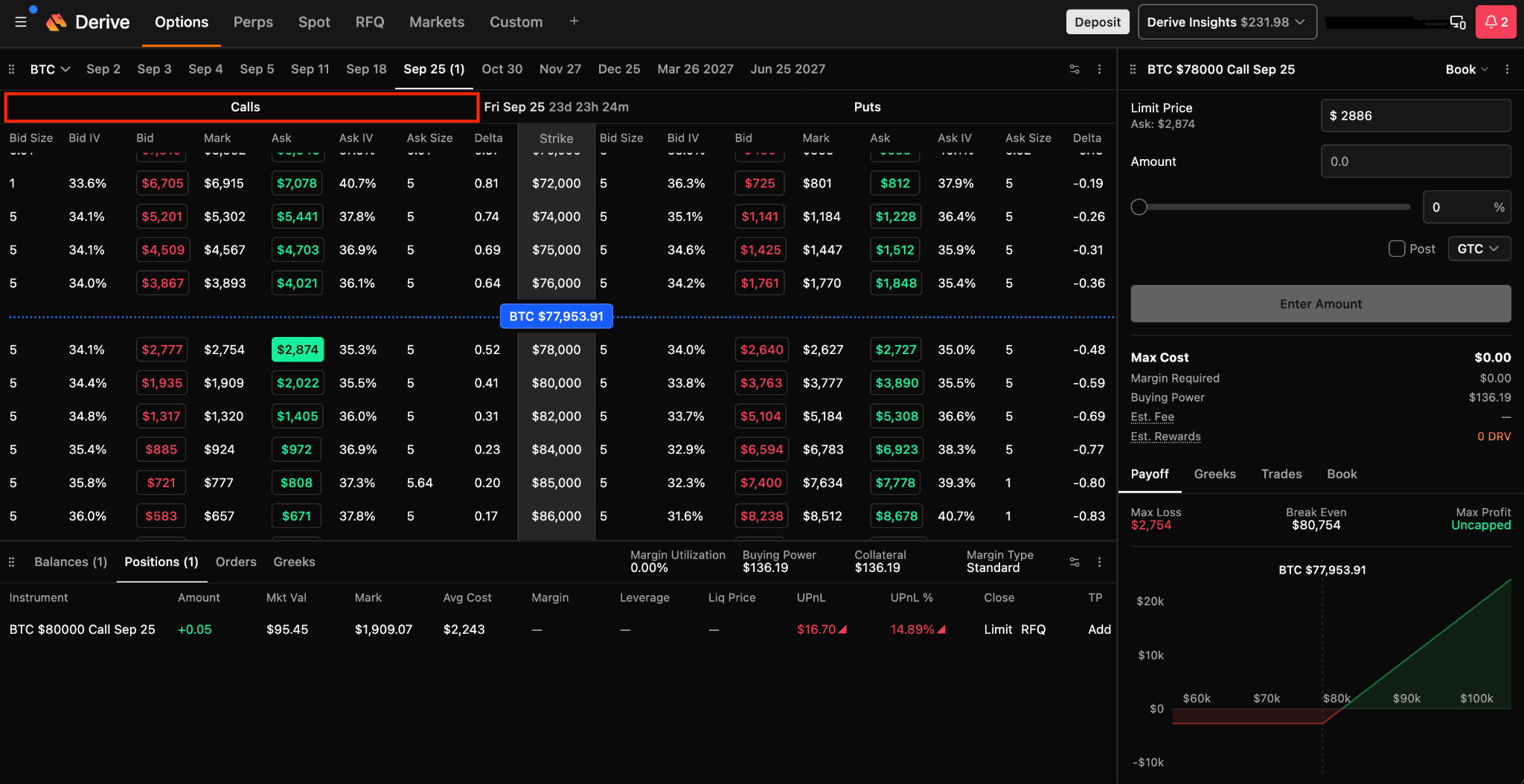
Example
- BTC is trading around $78,000
- You buy the $80,000 call expiring in 25 days
- The ask is $2,200 per BTC, so a 0.1 size costs $220
Your breakeven is the strike plus the premium you paid, which is $82,200. BTC has to close above that at expiry for the trade to be profitable.
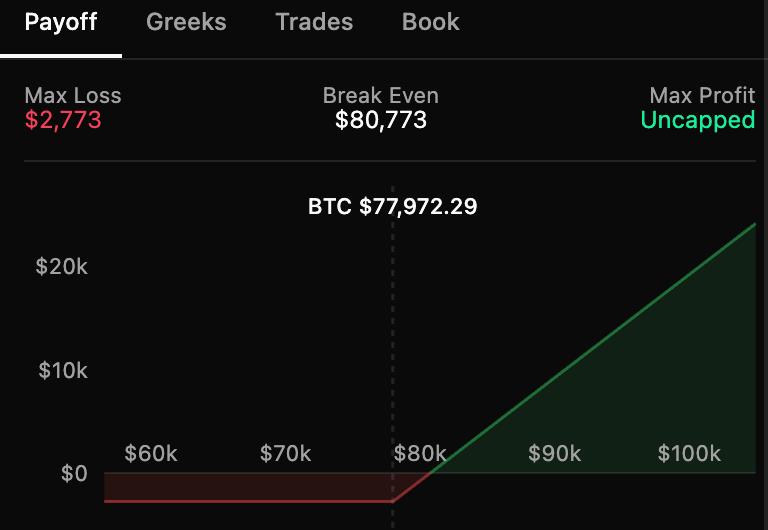
BTC finishes below $80,000
The call expires out of the money and is worth nothing. You lose the premium you paid and nothing beyond it.
BTC finishes between $80,000 and $82,200
The call has value at expiry, but less than you paid for it. You recover part of the premium and still finish down on the trade.
BTC finishes above $82,200
The call is worth more than you paid and the position is profitable. From here, every dollar BTC rises is a dollar of profit per contract.
How to Buy a Call on Derive
- Open the options chain and select an expiry from the row of dates at the top.
- Pick a strike above the current spot price. Strikes closer to spot cost more and are more likely to finish in the money, strikes further away cost less and need a bigger move.
- Click the row on the call side to load it into the trade form.
- Select Buy to Open, enter your size, and check the total cost before submitting. That total is your maximum loss.
- Once filled, the position appears under Positions with live PnL, mark price and Greeks.
Why the Position Shows a Small Loss Immediately
A new call almost always shows red the moment it fills. This is not a mistake and it is not the trade going against you.
You bought at the ask, and the position is valued at the mark, which sits below it. The gap between the two is the spread. It is a real cost, and it is why wide markets are worth avoiding, but it is not a loss in the direction of the trade.
When Does Buying a Call Make Sense?
Buying a call fits when you expect a move up, want defined risk, and are willing to be wrong for a fixed cost. It can make sense if you:
- Have a directional view with a rough timeframe attached to it
- Want exposure without a liquidation price
- Want to size a position by what you are willing to lose rather than by margin
It works less well when you expect the market to sit still. An option loses value as expiry approaches if the underlying does not move, so being right slowly is not the same as being right.
What Are the Risks?
The premium is the whole risk, but it is a real risk. Most calls that are bought out of the money expire worthless.
Time works against a long call. Every day that passes without a move takes value out of the position, and that effect accelerates in the final weeks before expiry.
The trade needs the move to be large enough and to happen before the expiry you selected. A view that is correct a month after the option expires pays nothing.


