



A put is the mirror image of a call. It pays out when the underlying falls below a set price, on a set date.
People buy puts for two different reasons. Either they want short exposure without a liquidation price, or they already hold the asset and want a floor under it.
What a Put Actually Does
Buying a put is a bet that the underlying finishes below a chosen price on a chosen date. As with calls, options on Derive settle in USDC, so the payout arrives as cash rather than as a sale of the underlying.
The premium you pay is the maximum you can lose. That holds whether you are using the put as a directional trade or as protection.
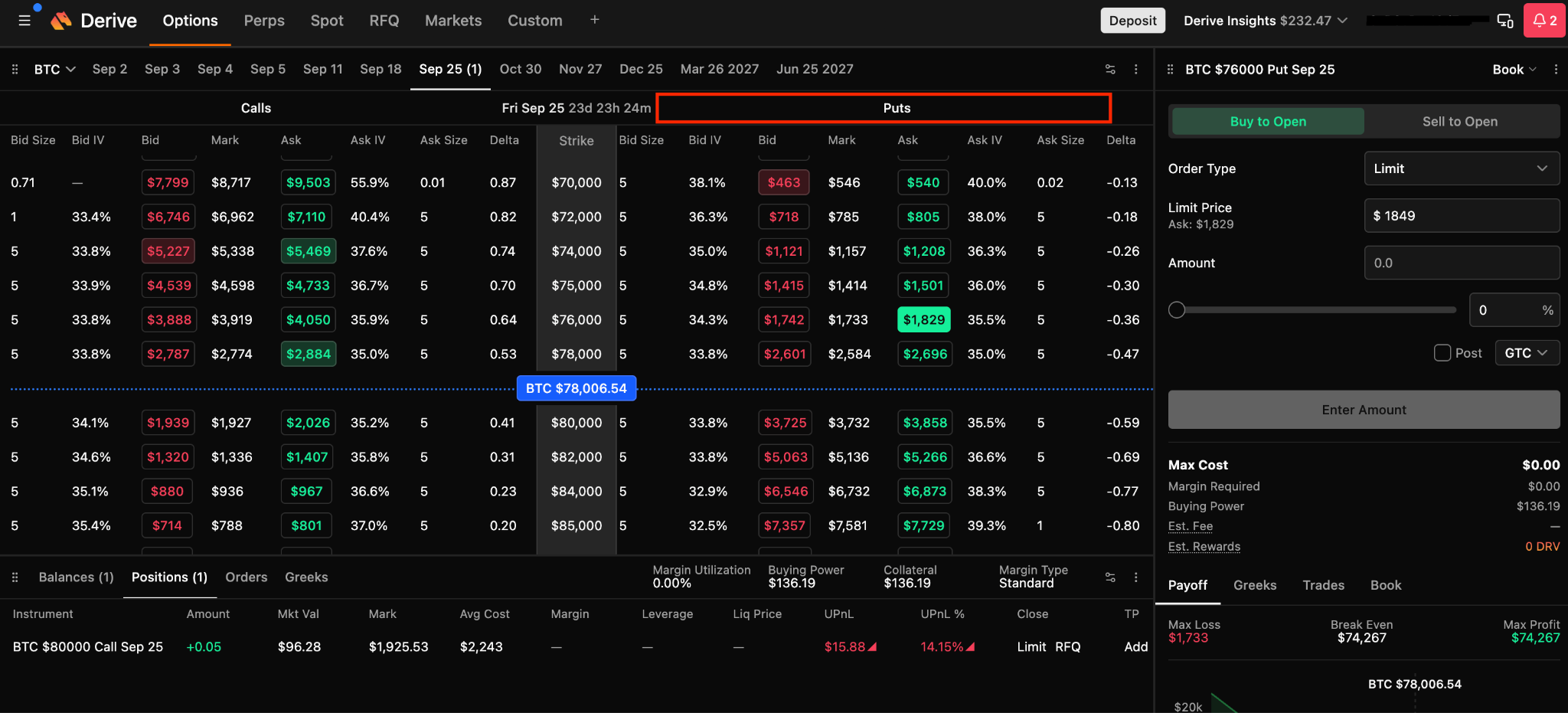
Example
- BTC is trading around $78,000
- You buy the $76,000 put expiring in 25 days
- The ask is $2,000 per BTC, so a 0.1 size costs $200
Your breakeven is the strike minus the premium, which is $74,000. BTC has to close below that at expiry for the trade to be profitable.
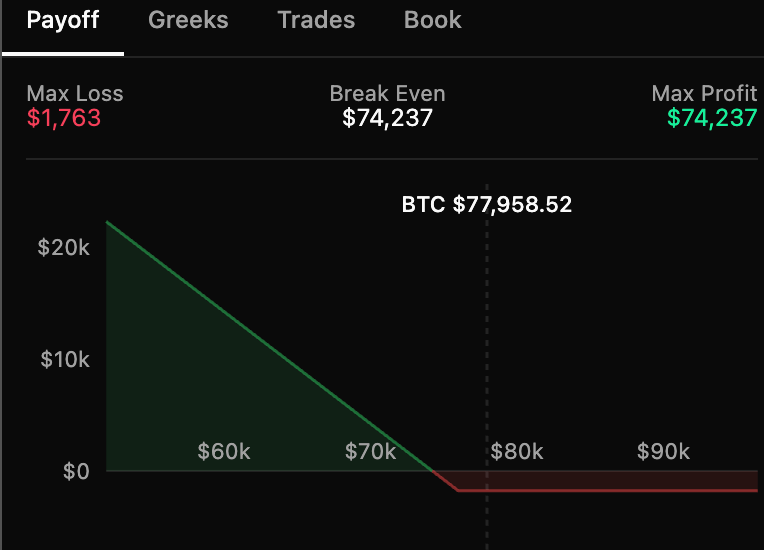
BTC finishes above $76,000
The put expires out of the money and is worth nothing. You lose the premium and nothing more.
BTC finishes between $74,000 and $76,000
The put has value at expiry, but less than you paid. You recover part of the premium and still finish down on the trade.
BTC finishes below $74,000
The put is worth more than you paid and the position is profitable. Every further dollar of downside adds a dollar of profit per contract.
How to Buy a Put on Derive
- Open the options chain and select an expiry.
- Pick a strike below the current spot price. Strikes close to spot cost more and protect sooner, strikes further below cost less and only start working after a larger fall.
- Click the row on the put side to load it into the trade form.
- Select Buy to Open, enter your size, and check the total cost before submitting.
- Once filled, the position appears under Positions with live PnL and Greeks.
As with a call, a freshly opened put usually shows a small loss straight away. You paid the ask and the position is valued at the mark. That gap is the spread, not the market moving against you.
Using a Put as Protection
The same contract behaves very differently depending on what else you hold.
If you own BTC, a put acts as insurance. If spot falls, the put gains value and offsets part of the loss on the holding. If spot rises, the put expires worthless and the premium is what the cover cost you, in the same way an unused insurance policy costs its premium.
Sizing follows the exposure you want covered rather than the size of the view. Covering roughly the position you hold gives you a floor, and covering less leaves part of the holding unprotected.
When Does Buying a Put Make Sense?
A put fits when you expect a move down, or when you want to hold through a period of risk without selling. It can make sense if you:
- Expect downside within a defined timeframe
- Want short exposure with no liquidation price
- Hold the asset and want to limit downside through a specific event or date
- Would rather pay a known cost than decide whether to sell
It is a poor fit when you have no timeframe. Protection that expires before the risk arrives has simply been paid for and thrown away.
What Are the Risks?
The premium is the maximum loss, and in a market that drifts sideways or upward, that is the most likely outcome.
Puts also decay with time in the same way calls do. Holding protection permanently is expensive, which is why most holders buy it around specific events rather than running it all year.
Protection is only as good as the strike. A put at $76,000 does nothing about the fall from $78,000 to $76,000. That first stretch of downside stays with you, and choosing a strike is really choosing how much of the fall you are willing to absorb yourself.


