



A covered call turns an asset you already hold into income. You sell someone else the upside above a chosen price, and you keep the payment whether that price is reached or not. It can be seen as an alternative to a classic limit sell order.
This is the first episode where you are the seller rather than the buyer. The premium arrives upfront. What you give up in return is everything above the strike.
What a Covered Call Actually Does
You hold the underlying and you sell a call at a strike above the current price. The buyer pays you premium for the right to the move above that level.
Options on Derive settle in USDC, so nothing is delivered. If the call finishes in the money, the difference is paid out in cash and your Spot BTC stays exactly where it is. The gain on the holding above the strike and the loss on the short call offset each other, which is why the position behaves like a holding with a ceiling on it.
The premium is yours from the moment the trade fills. That part of the outcome is settled and does not depend on where the market goes.
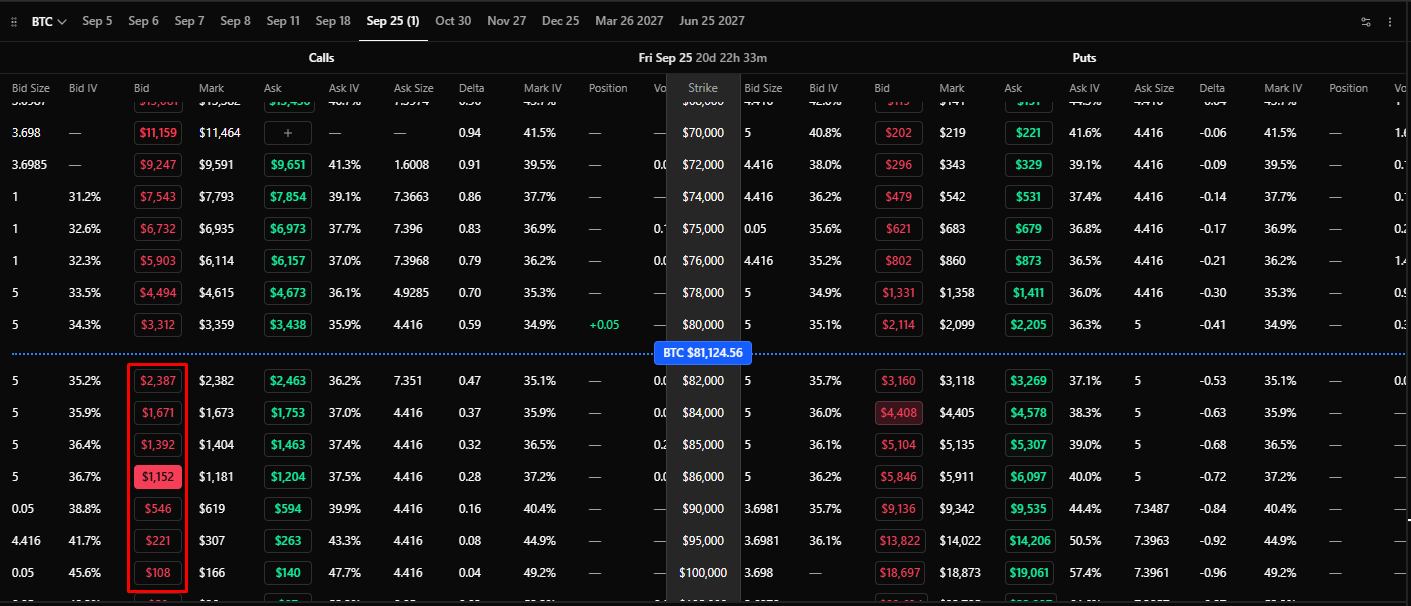
Example
- BTC is trading around $81,000 and you hold 0.1 BTC
- You sell the $86,000 call expiring in 21 days
- The bid is $1,100 per BTC, so a 0.1 size collects $110
Your ceiling is the strike plus the premium you received, which is $87,100 per BTC. Above that level the position earns nothing further.
BTC finishes below $86,000The call expires worthless. You keep the premium and you keep the BTC. This is the outcome the trade is built for, and it is the most common one.
BTC finishes between $86,000 and $87,100The call settles in the money and the difference is deducted in USDC, but it is smaller than the premium you collected. You are still ahead of where you would have been holding the BTC alone.
BTC finishes above $87,100The short call now costs more than the premium brought in. The holding itself is still up, but every dollar above the ceiling is a dollar you no longer capture. This is the real cost of the trade.
BTC fallsThe premium cushions the fall by $1,100 per BTC and nothing more. A covered call is income, not protection. If you want a floor under the holding, that is a put, and it is covered in episode 03.
How to Sell a Covered Call on Derive
- Hold the underlying in the account. It sits in your balance and counts toward collateral.
- Open the options chain and select an expiry from the row of dates at the top.
- Pick a strike above the current spot price. Strikes closer to spot pay more premium and cap you sooner, strikes further away pay less and leave more room to run.
- Click the row on the call side to load it into the trade form.
- Select Sell to Open, enter your size, and check both the premium you receive and the margin required before submitting.
- Once filled, the short call appears under Positions with live PnL and Greeks, next to the collateral you hold against it.
Reading the Payoff Panel Correctly
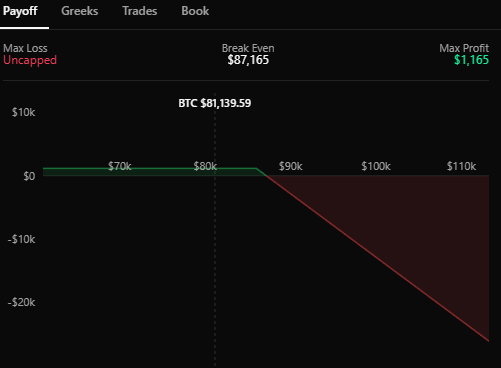
The payoff panel will show Max Loss as uncapped. That line describes the short call on its own, priced as if you held nothing else.
It is not describing your actual exposure. The BTC you hold rises alongside the call that is going against you, and the two cancel above the strike. What the panel cannot see is the rest of your balance sheet, so read it as one leg of the position rather than the whole picture.
Sizing follows from the same logic. The call is covered only up to the amount of the underlying you actually hold. Selling more calls than that is a different trade with a genuinely open-ended loss.
When Does Selling a Covered Call Make Sense?
Selling a covered call fits when you hold an asset, expect it to move sideways or grind slowly higher, and can name a price at which you would be content to stop participating. It can make sense if you:
- Hold the underlying with no intention of selling below the strike
- Expect a quiet stretch rather than a sharp move
- Want income from a position that would otherwise sit idle
- Would rather be paid now than hope for a breakout later
It works less well in front of a catalyst you expect to be resolved to the upside. The premium is small compensation for missing a repricing, and a strike that looked far away in a quiet market can be reached in a single session.
What Are the Risks?
The upside is capped and that is the whole trade. Selling calls in a strong trend means selling the same rally back to the market week after week.
The downside is untouched. A covered call reduces the cost basis by the premium and does nothing else, so a holding that falls hard still falls hard.
Being short an option is a margined position. The short call carries a margin requirement, and collateral is valued with a haircut that varies by asset, so a falling market tightens buying power from both directions at once. Check the requirement in the trade form before you submit rather than after.


