



Every option has a fixed expiry date. When that date arrives, the contract settles and the position is gone.
A roll moves a position from one contract to another: a later expiry, a different strike, or both. It is one of the most common position management actions in options trading. This guide walks through how it works on Derive.
What is a roll?
A roll is always two legs:
- Closing the contract you currently hold
- Opening a new contract with a different expiry, a different strike, or both
There is no button that extends an option. The contract you hold keeps its original expiry no matter what, so moving to a later date means selling that contract and buying a different one.
There are three variants:
- Roll out: same strike, later expiry
- Roll up or roll down: same expiry, different strike
- Roll up and out: both at once
This guide covers the roll out, which moves a position further into the future without changing the strike.
What a roll costs
The headline number is the net debit: what the new contract costs minus what the old one returns.
Rolling to a later expiry is nearly always a net debit, because a contract with more time left is worth more than one with less.
But the total is not the useful number. What matters is what you pay per day of remaining time.
Example
- BTC trades around $80,500
- You hold a BTC $82,000 call with 5 days to expiry, worth about $640
- The same $82,000 strike expiring in 40 days is worth about $3,100
Both contracts are out of the money. Spot sits below the strike, so neither has intrinsic value and the entire price is time value.
The total
Selling the near contract returns roughly $640. Buying the far contract costs roughly $3,100. The net debit is about $2,460.
The cost per day
- Near contract: $640 across 5 days, about $128 per day
- Far contract: $3,100 across 40 days, about $77.50 per day
Key Takeaway: You pay more in total and less per day. That is the trade a roll makes.
Two things are worth keeping in mind about those figures.
First, they are averages. Time value does not decay evenly. A near-dated option loses very little on its first day and a great deal on its last, so the daily cost of the short-dated contract rises sharply as expiry approaches.
Second, the strike is the same but its distance from spot is not. With 40 days left, $82,000 is a level BTC could realistically reach. With 5 days left it is much less likely. Part of the price difference comes from that, not from time alone.
How to roll a position on Derive:
1. Open your position
Go to the Positions tab and note the contract you hold: asset, strike, expiry and size. These are what the sell leg of your roll needs to match.
2. Find the target contract
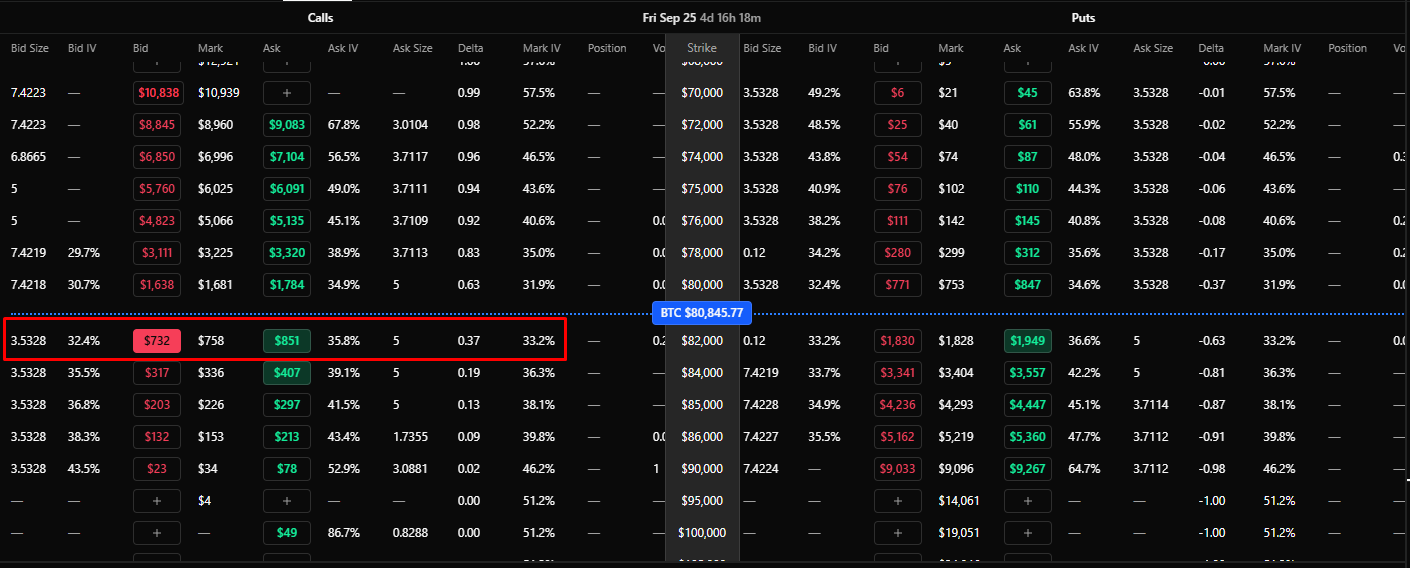
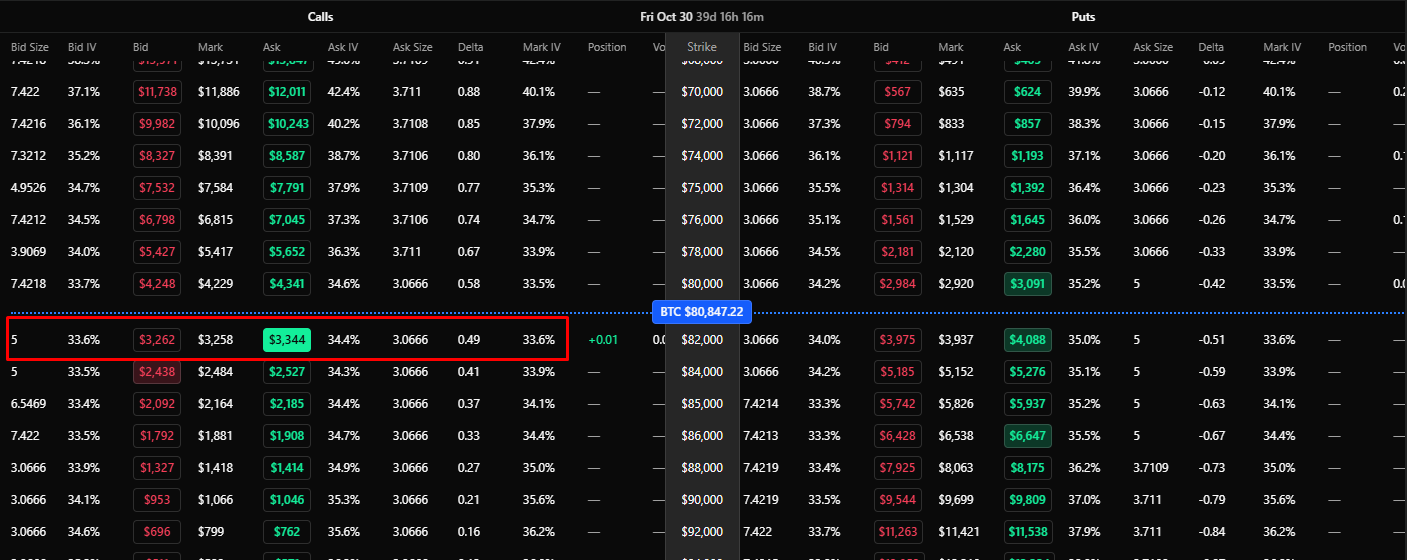
Open the options chain and switch to the expiry you want using the tabs at the top. Scroll to the same strike.
The strike row looks identical across chains. The prices do not.
3. Compare the numbers
Take the bid on your current contract and the ask on the target contract. The difference is your net debit.
Then divide each contract price by its days to expiry to get the cost per day on both sides.
4. Build both legs as one RFQ
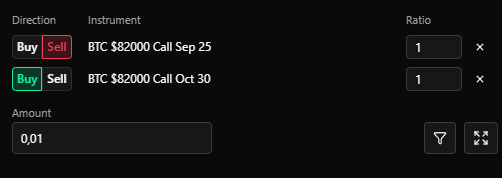
Open the RFQ builder and add both legs: sell the contract you hold, buy the target contract, same size on each.
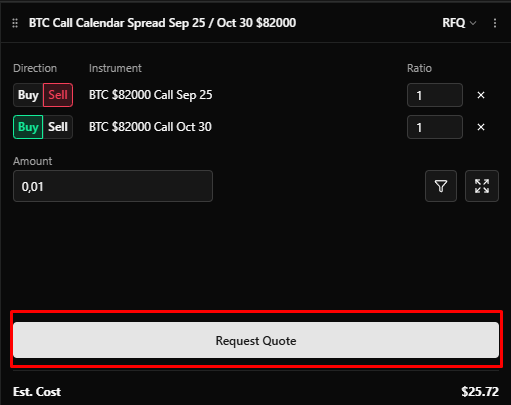
Derive names the resulting structure a Call Calendar Spread. A roll out is a calendar spread, and the platform labels it as one.
The alternative is two separate orders in the order book. That works, but it crosses two spreads and leaves a gap between the fills during which the market can move. Derive’s margin engine also evaluates your net position, so a two-leg ticket is more capital efficient than legging in separately.
5. Request a quote and execute
Submit the request. Market makers respond with a net price for the package, and the trade fills as one unit or not at all.
Review the total cost, the fees across both legs and the margin required before confirming.
6. Check the new position
Your old position line is gone and the new contract appears in its place, same strike, later expiry.

When Does Rolling Make Sense?
Rolling is a mechanical tool rather than a strategy in itself. It is generally used when:
- Your view on the underlying has not changed but your contract is running out of time
- The underlying has moved and you want to reset the strike accordingly
- You want to stay in a trade without paying the steep daily time decay of a near-dated contract
It is worth being clear about what a roll does not do. It does not undo the result of the contract you are closing. That position settles at whatever it is worth, and the outcome is final. The new contract is a new trade with its own cost, its own expiry and its own result.


